Reykjanes peninsula – Volcanic activity
Since March of 2021, volcanic activity on the Reykjanes peninsula has steadily ramped up, with regular eruptions threatening private property in Grindavík, energy infrastructure in Svartsengi, and the Blue Lagoon. The IRCA keeps a close watch on developments in the region in order to ensure that the transportation system can service the fluctuating needs of the Reykjanes population.
Reykjanes peninsula – Volcanic activity
Volcanic history of Reykjanes
Historical records of volcanic activity on the Reykjanes peninsula date back more than one thousand years. Five distinct volcanic systems are located within the peninsula: the Reykjanes system, Svartsengi, Fagradalsfjall, the Krýsuvík system, and the Brennisteinsfjöll/Bláfjöll system. This volcanic ecosystem typically lays dormant for around 800-1000 years before activating, and its volcanic periods are known to last for centuries at a time. The last recorded volcanic period on the peninsula began around 950, and lasted until roughly 1240.
After centuries of hiatus, the Icelandic Meteorological Office reported in 2019 that seismic activity in the region indicated a new volcanic period was on its way. The first eruption began thereafter in March of 2021, with the formation of lava fissures in Fagradalsfjall. Eruptions in the Fagradalsfjall volcanic system concluded in 2023, but recent eruptions have centered around Svartsengi, threatening infrastructure and upending lives for the residents of Grindavík.
Responding to the new eruptions
The IRCA has undertaken considerable work in making sure that main evacuation routes around Grindavík, the Blue Lagoon and the Svartsengi plant remain open in case of further volcanic activity.
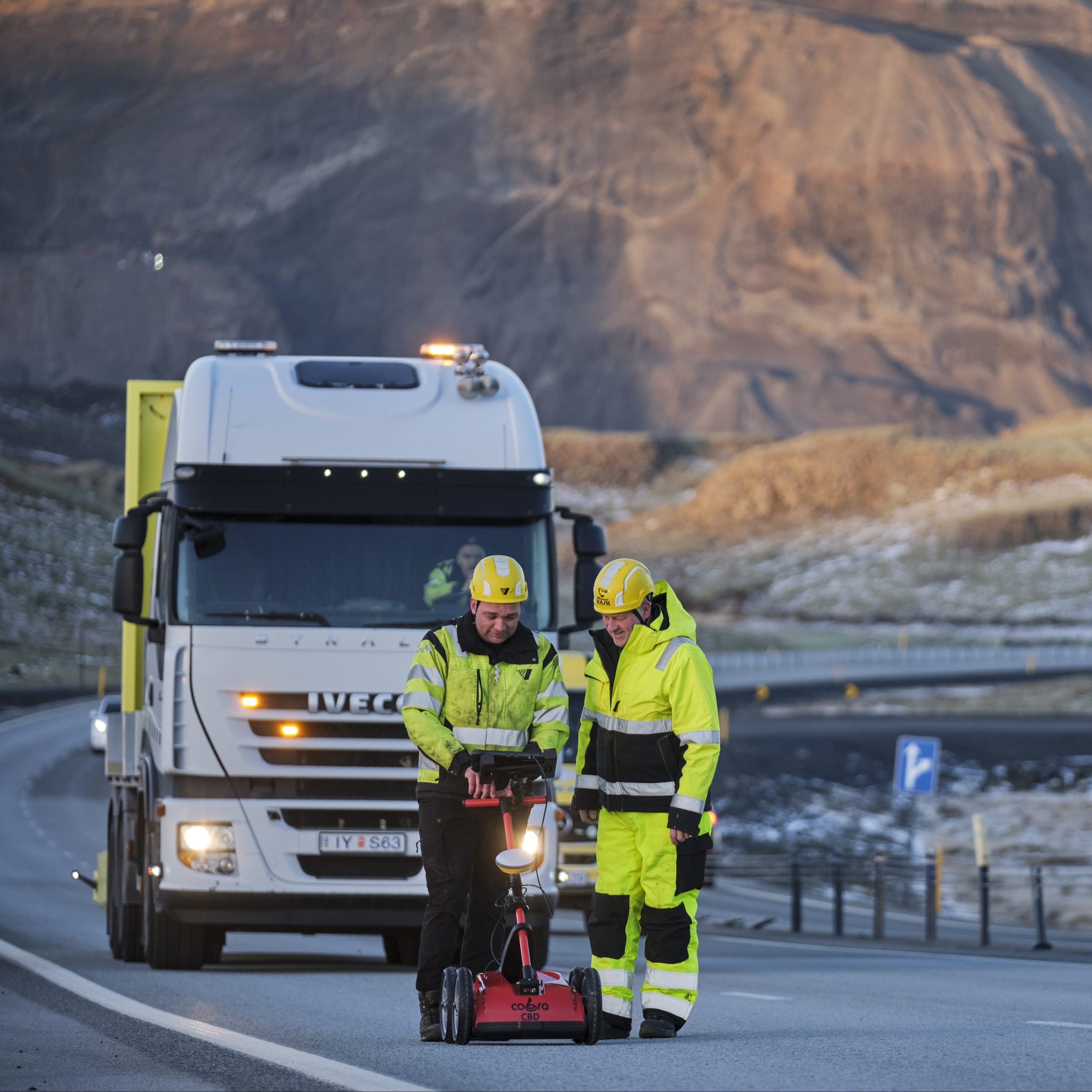
Emergency road repair, construction, and their subsequent protection through the construction of lava embankments are just some of the projects which have been high on the list of IRCA priorities on the Reykjanes peninsula over this new volcanic period. The IRCA has also committed to increased winter service in the region, and assisted in mapping out cracks and cavities under Grindavík and its surrounding area.
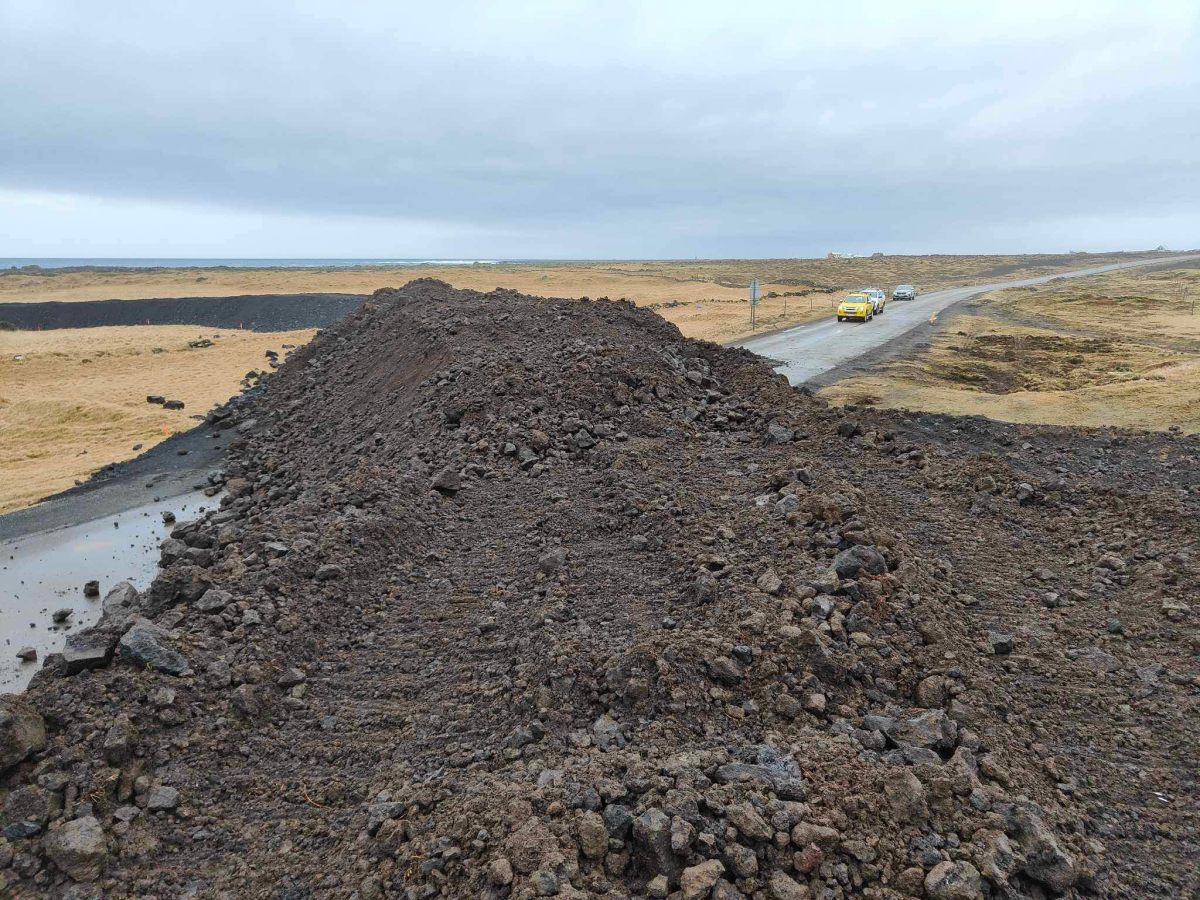
Varnargarður við Grindavík.
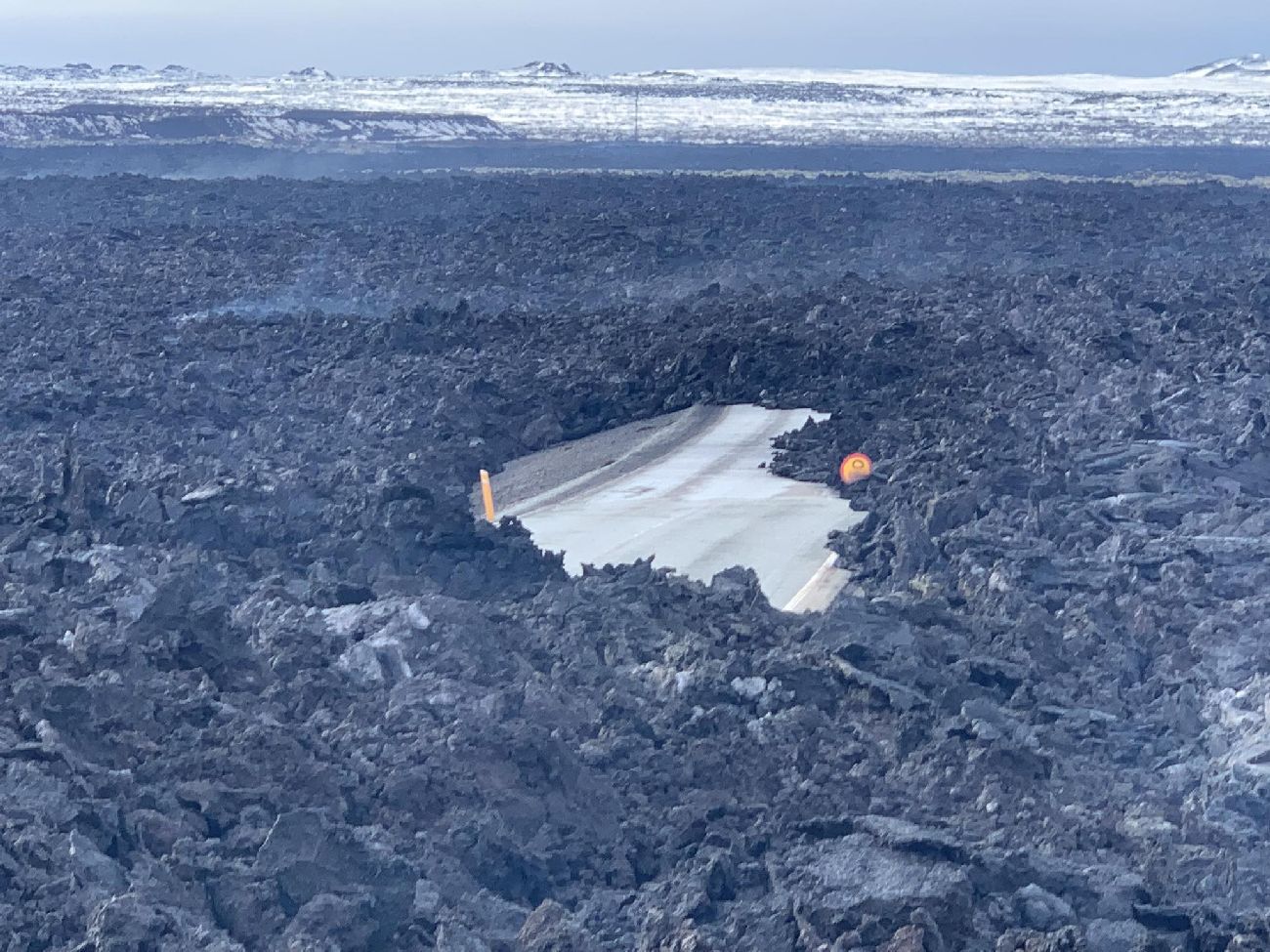
Hér sést í veginn undir hrauninu.
Disruptive effects
Outside of the considerable infrastructure damage and the frequent evacuation orders that have affected Grindavík, the Blue Lagoon, and the Svartsengi power plant, these eruptions have also had significant environmental consequences. One of the most pressing of these has been a marked decline in air quality across parts of the country. As sulfur dioxide (SO₂) is released into the atmosphere, it disperses widely, combining with oxygen and moisture to form sulfate (SO₄). This substance, often referred to locally as gosmengun (“eruption pollution”), can linger over towns and cities, especially in calm or mild weather conditions, and pose health concerns for residents and visitors alike.
During such episodes, it is strongly advised that people avoid strenuous outdoor activity, as exertion increases exposure to polluted air. Travellers with pre-existing health conditions—such as asthma, respiratory illnesses, or cardiovascular problems—should take particular care, and are encouraged to carefully assess the situation before undertaking any journeys to, from, or around eruption zones where sulfate pollution may be present.
For the general public, staying informed is the most effective precaution. All travellers are encouraged to monitor updates on loftgæði.is, where real-time information regarding ambient air quality across the country is made available. By remaining aware of the latest conditions and following official guidance, visitors and residents can better protect their health while continuing to experience Iceland’s remarkable landscapes.
Travelling to eruption zones
As long as the volcanic eruptions continue, so too will the flow of travellers eager to witness this rare natural phenomenon up close. The IRCA, working in close cooperation with ICE-SAR, is committed to ensuring that visitors can enjoy the experience without unnecessary risk. Trained teams remain active in the area to monitor conditions, provide assistance, and share vital information with the public.
Safety, as with all IRCA operations, is the highest priority. Visitors are strongly encouraged to respect all official guidelines, follow the instructions of professionals on site, and stay on clearly marked hiking paths at all times. While the eruption sites are spectacular, they are also unpredictable and potentially hazardous. The terrain is constantly changing, with cracks opening suddenly in the ground, loose rocks underfoot, and fissures that may not be visible until it is too late. Leaving the marked trails can put travellers in immediate danger.
Under no circumstances should anyone attempt to stand on or cross newly hardened lava fields. Though the rock may appear stable, significant heat often remains trapped beneath the surface, making it brittle and unstable. In some places, only a thin crust of hardened rock separates visitors from molten lava flowing below. The surface could give way without warning, posing life-threatening risks.
By staying alert and heeding all safety advice, travellers can help ensure that their visit to the eruption sites is both memorable and safe. The cooperation of all visitors is essential so that emergency teams can focus their efforts where they are most needed, and so that the natural wonder of the eruptions can be experienced responsibly and without avoidable accidents.