

Traffic Data
The Icelandic Road and Coastal Administration has conducted structured traffic measurements since the mid-1960s, and publishes new data on the national road network each year. These data are essential for road and bridge design, environmental assessment, economic evaluation, funding decisions for maintenance and services, and prioritizing future projects and development.
Traffic statistics
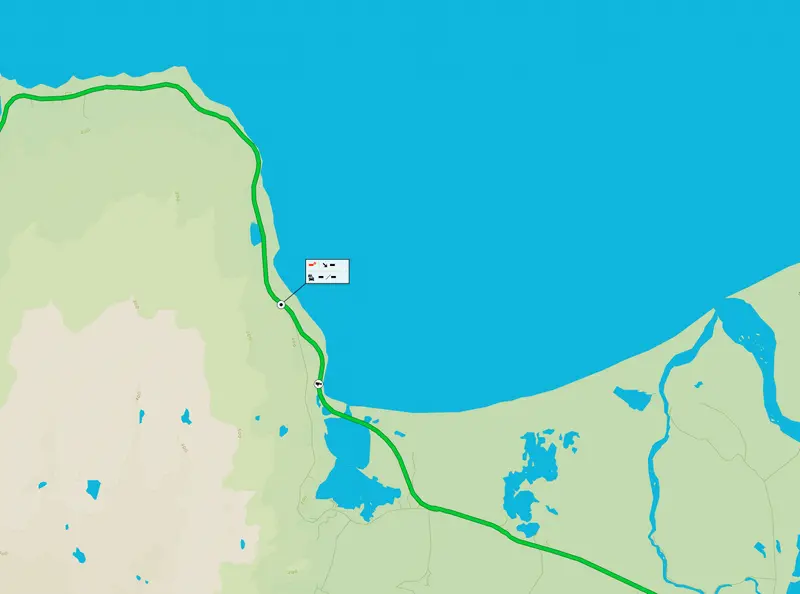
Traffic data are calculated as averages and made available on an interactive traffic map showing volumes and averages across the national road network. The interactive map is only available in Icelandic.
AADT (ÁDU) | The average number of vehicles per day over an entire year |
SDT (SDU) | The average number of vehicles per day during June, July, August, September |
WDT (VDU) | The average number of vehicles per day during January, February. March & December |
Projects based on traffic data
• Road network organization and road classification
• Prioritization of projects, including new constructions and paving
• Geometric road design
• Design of load-bearing-capacity on surfaces
• Bridge design
• Environmental impact assessments
• Economic feasibility analyses, including benefit–cost evaluations based on traffic forecasts
• Road safety analyses, where traffic data are required to calculate crash rates
— i.e., number of crashes per million vehicle-kilometers
• Allocation of maintenance funding for roads and bridges and structural strengthening
• Service level classification, including planning for winter and summer road maintenance
The projects delineated above commonly rely on:
• Annual Average Daily Traffic (AADT)
• Vehicle-kilometers travelled (VKT)
• Seasonal daily traffic indicators, such as
— Summer Daily Traffic (SDT)
— Winter Daily Traffic (WDT)
Vehicle speed data
Speed Measurements
Two types of equipment are used for measuring vehicle speeds:
• Traffic counters that record both speed and volume.
Most of these counters are located in the capital area and along the Ring Road.
• Mobile radar equipment, which can be deployed at different locations as needed.
Through these extensive measurements, the Icelandic Road and Coastal Administration has gathered valuable information on speed trends on national roads over the past decades.
Knowledge of vehicle speeds is essential for many of the agency’s planning, safety, and operational tasks.
Traffic on highways
The Icelandic Road and Coastal Administration publishes annual traffic information for the national road network, i.e. primary, secondary and regional roads. Since 1995, national roads within urban areas have also been classified as primary and secondary roads. However, traffic information for these roads was first published for the year 2000.
Below are two buttons providing access to detailed data:
• The upper button links to Excel files containing traffic averages
(see abbreviations and explanations above), including AADT, SDT, WDT and vehicle-kilometers travelled.
These files are available from the year 2000 and also include the segmentation of the road network into sections and sub-sections by regional divisions of the Administration.
• The lower button links to traffic counts, i.e. daily reviewed count data from individual traffic counters.
These datasets are available from 2019 in PDF and text formats.
This information supports planning, design, funding and service decisions for the national road network.
What are “Stallur” and “Akstur”?
1) Stallur (Road Sub-Section)
Road sections can be long, and traffic volumes may vary considerably along them.
To increase accuracy in calculations and improve the quality of traffic data,
each section is therefore divided into several
road sub-sections of varying length.
- calculating traffic-based indicators
- publishing detailed traffic information
- supporting engineering and planning decisions
Recommended translation: Road sub-section (stallur)
2) Akstur (Vehicle-Kilometres Travelled – VKT)
expressed as vehicle-kilometres per year.
This metric is used to monitor changes in road use over time and is
important for safety analysis.
Number of crashes per million vehicle-kilometres travelled (VKT)