Driving safely in Iceland
Many first-time travellers might find parts of the Icelandic road system to be very different from what they’re used to: single-lane bridges and tunnels, open to both directions of traffic, are still relatively common; uneven gravel roads are frequent when travelling off the most popular roads; and travel on mountain roads often requires large, modified vehicles.
Anyone travelling within Iceland is encouraged to prepare for their journey by familiarising themselves with their planned route, paying close attention to weather and road conditions, and making sure they comprehend Icelandic traffic laws.
Safety concerns
Per the Icelandic Tourist Board: with the exception of the COVID-19 years of 2020-2021, Iceland has seen nearly five times its population pass through ports of entry, on average, per year, since 2016. A large part of those who arrive in Iceland wish to see the Icelandic countryside’s natural wonders, with a significant percentage electing to rent private vehicles for ease and freedom in exploring.
In the case of accident or traffic collision, depending on where in the country you are, first responders and ambulance services could be up to an hour away on the Ring Road, with a much longer potential wait in more remote areas. Due to these factors it is of paramount importance to prevent accidents from occurring at all. The IRCA, in accordance with its high prioritisation of safety standards, seeks to minimise traffic-related risks in every aspect related to its operations.
Traffic law and speed limits
Icelandic traffic law dictates that the speed limit in urban areas is 50 km/h, but it is important to keep a look out for signs indicating otherwise. In urban areas, when no signs are passed designating a top speed on a given road, it is almost always 50 km/h. On throughways the speed limit is increased to 60 km/h, whilst residential streets typically see a reduced speed limit of 30 km/h. On highways that pass through urban areas, the speed limit is typically set between 60-80 km/h.
The speed limit for travelling on highways outside of urban areas is 90 km/h. This is the fastest legal speed you can travel in Iceland.
The speed limit for travelling on gravel roads is 80 km/h. Travellers should be aware that driving at unsafe speeds on gravel roads may result in the car’s tires losing their grip, and can cause the vehicle to spin out. Driving on gravel roads also frequently results in the kick-up of small particles, which can damage a car’s windshield. Accidents where windshields shatter have been known to happen when two cars meet at high speeds along a gravel road. Visibility conditions can also be very poor when driving along a gravel road in dry weather, due to dust. Travellers should always be mindful of road conditions and visibility when travelling on gravel and paved roads alike.
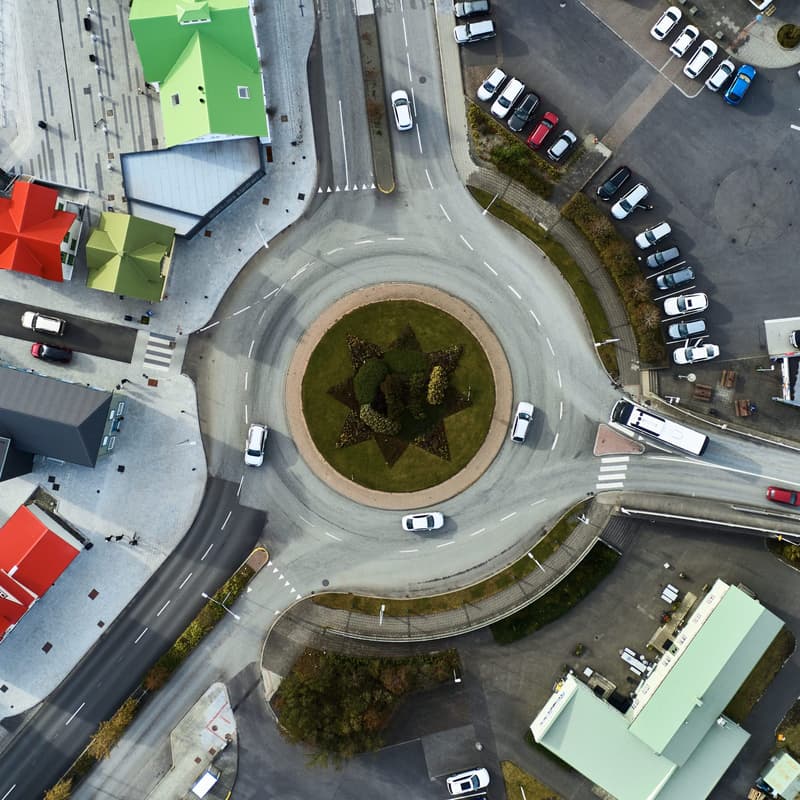
The Icelandic road system utilises roundabouts frequently. It is important to remember that, in Iceland, the innermost circle of a roundabout has right of way over the outer circle/s.
Emergency services
When accidents occur in Iceland, due to remoteness, or road and weather conditions, help can be a long ways away. In instances where conventional ambulances cannot sufficiently reach the place of accident, an ICE-SAR rescue unit can be deployed in order to assist in bringing the injured party to safety.
ICE-SAR is the largest association of volunteer rescue services in Iceland. They primarily deal with highland rescue operations, as well as rescue operations at sea.
More information about ICE-SAR operations can be found here. ICE-SAR also operates Safetravel, a website designed to familiarise travellers with Icelandic road conditions and traffic law. Travellers are encouraged to acquaint themselves with Safetravel before starting their journey.
Driving in summer
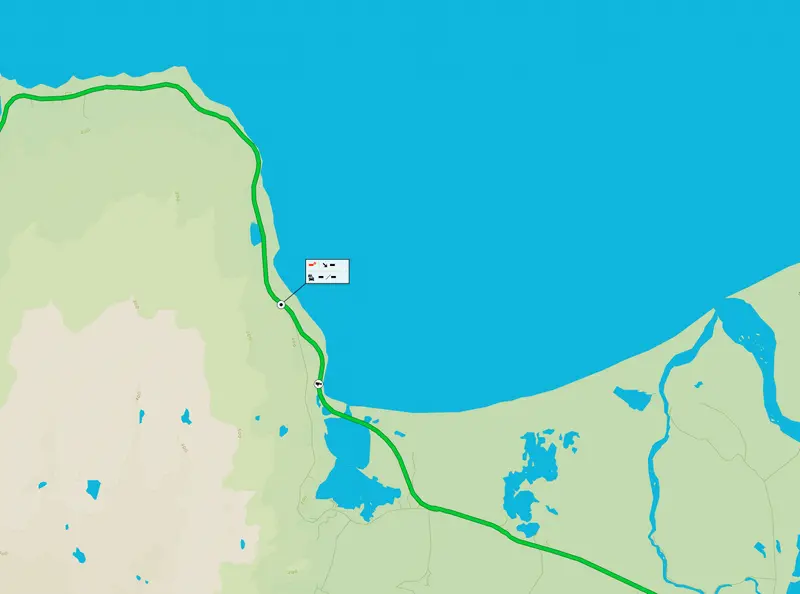
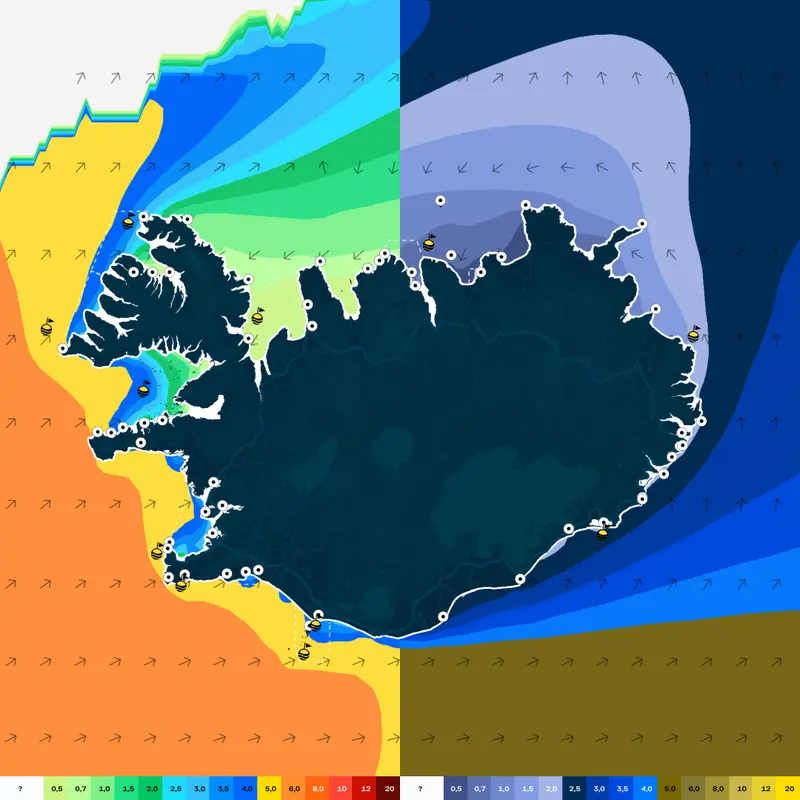
Most of the time, summers in Iceland make for great driving. Despite this, storms, especially in the island’s northern regions, have been known to cause road closures well into June. Travellers are always encouraged to consult with the IRCA’s Traffic info website, which provides real-time information on road closures and alerts on weather conditions in English, Polish and Icelandic, before planning their journeys.
Most mountain roads (F-roads) often do not open until late June or early July, as servicing these roads has to wait until the ground has properly thawed. Any traffic on roads not ready for vehicle traffic can damage those roads even further, and so the IRCA maintains strict closure policies which travellers must respect, or face heavy fines.
More information on mountain roads can be found here.
Driving in winter
Driving in Iceland during the winter months can be dangerous for drivers that are inexperienced in winter conditions; unpredictable weather, freezing temperatures, ice on the road, the small daylight window and a great deal more factors create conditions which can easily lead to severe accidents, even amongst experienced winter travellers.
When driving in winter conditions, travellers are encouraged to be flexible in their planning, as roads have been known to close without warning as severe storms hit. Travellers are furthermore asked to respect road closures and to plan accordingly. Even if a road is not closed, travellers unused to winter conditions might be better off avoiding unnecessary risks if sudden weather events occur.
Travellers driving in Icelandic winter conditions — experienced or otherwise — are encouraged to stay informed by utilising information from the Icelandic Meteorological Office, Safetravel, and the IRCA’s own data from our traffic info website.
Glacial outburst floods (jökulhlaup)
Many of Iceland’s rivers, including many on the Ring Road, are glacial rivers. These rivers are subject to glacial outburst floods (jökulhlaup) where thawing due to geothermal activity, eruptions, or other factors can cause the river to either rapidly or gradually increase its floodwater output, often carrying sediment, pack ice and various other material with it.
Glacial outburst floods can damage bridges and rend roads impassable for up to weeks at a time, depending on severity, but IRCA operations in areas prone to these floods seek to minimise the potential effects, for instance through sturdier bridge construction, and the construction of new roads away from flood plain areas most susceptible to damage.
The area most prone to glacial outburst floods is south and east of Vatnajökull, where large underground glacial lakes frequently build up and quickly release due to geological activity in the area. Travellers heading south and east from Reykjavík are encouraged to keep an eye out for information regarding potential glacial outburst floods on their travels, either through traffic info, or through the Icelandic Meteorological Office.