

21 ágúst 2025Height barriers on Breiðholtsbraut to prevent accidents
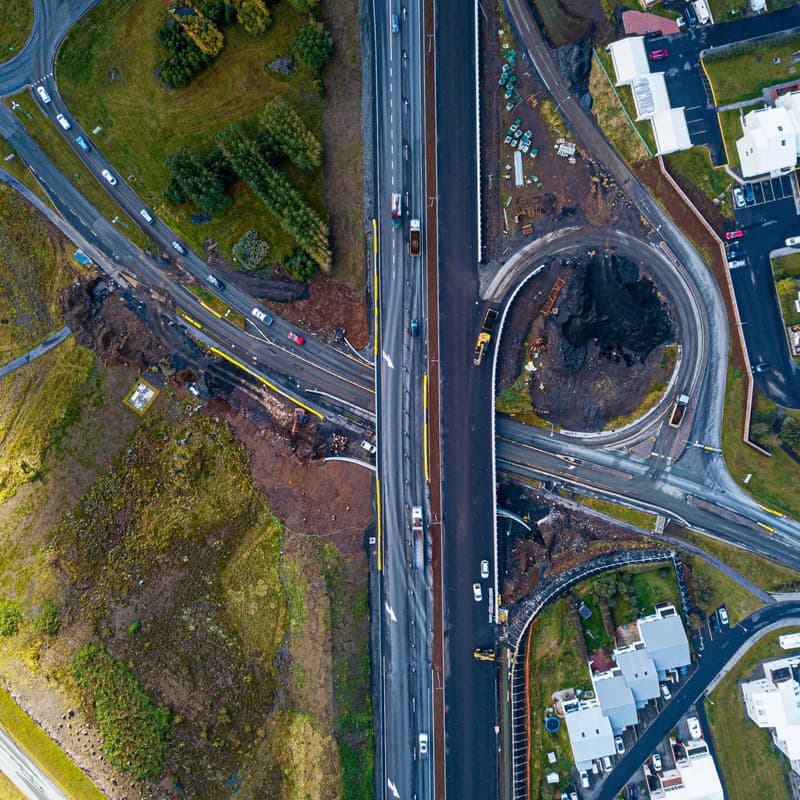
Due to construction work on a new road bridge over Breiðholtsbraut, height barriers have been installed on either side of the construction site to prevent vehicles from colliding with the bridge. Lights and information signs have also been put up to draw the attention of road users to these height restrictions. If the barriers are struck, an acoustic signal will sound to warn workers of the impending danger. These measures are intended to ensure the safety of both road users and those working on the bridge. Serious risks may arise if drivers of vehicles with excessively high loads attempt to pass under the bridge while work is in progress. The bridge is scheduled to be poured in October as part of the construction of the new Arnarnesvegur.
Traffic has been diverted to the southbound lane of Breiðholtsbraut due to ongoing construction works in the area. To maintain traffic flow, a temporary underpass has been installed beneath the bridge deck. This structure is supported by steel beams resting on loaded concrete units and is designed to safely accommodate traffic while construction is underway. During this period, the clearance under the bridge is reduced by the height of the underpass. However, it still exceeds the maximum permitted vehicle height of 4.2 metres according to current regulations, and therefore complies with safety requirements.
Repeated Violations of Height Restrictions
Despite these measures, vehicles have repeatedly struck the height restriction barriers installed in advance of the underpass, in some cases without drivers appearing to notice the bridge structure itself. This behaviour is a cause for concern, as loads exceeding the permitted height pose a direct risk to the structural integrity of the temporary installation.
If a vehicle is high enough to collide with the underside of the bridge, there is a risk of structural failure. The construction involves numerous steel components, each weighing approximately two tonnes, which are positioned above the traffic lane. Should any of these elements, or other construction materials, fall from a height of around five metres onto a vehicle below, the consequences could be severe or even catastrophic. The same risk also applies to personnel working on the bridge structure.
Additional Safety Equipment Installed
In response to these risks, the road authority has implemented additional safety measures to further reduce the likelihood of incidents. An automatic warning system, similar to those commonly used in tunnels, has been installed at the site. The system detects oversized vehicles and activates red flashing lights, clearly signalling drivers to stop immediately before entering the underpass.
Drivers are strongly urged to observe all warning signs and height restrictions in the area to ensure their own safety, as well as the safety of other road users and construction workers.
The Icelandic Road and Coastal Administration Urges Caution
The Icelandic Road and Coastal Administration urges contractors, transport companies, and drivers of larger vehicles to familiarize themselves with the height restrictions in place.
It is especially important to ensure that truck platforms are lowered, cranes are properly stowed, and loads do not exceed the permitted height. The aim is to prevent accidents and to ensure the safety of both construction workers and road users on Breiðholtsbraut during the bridge project.
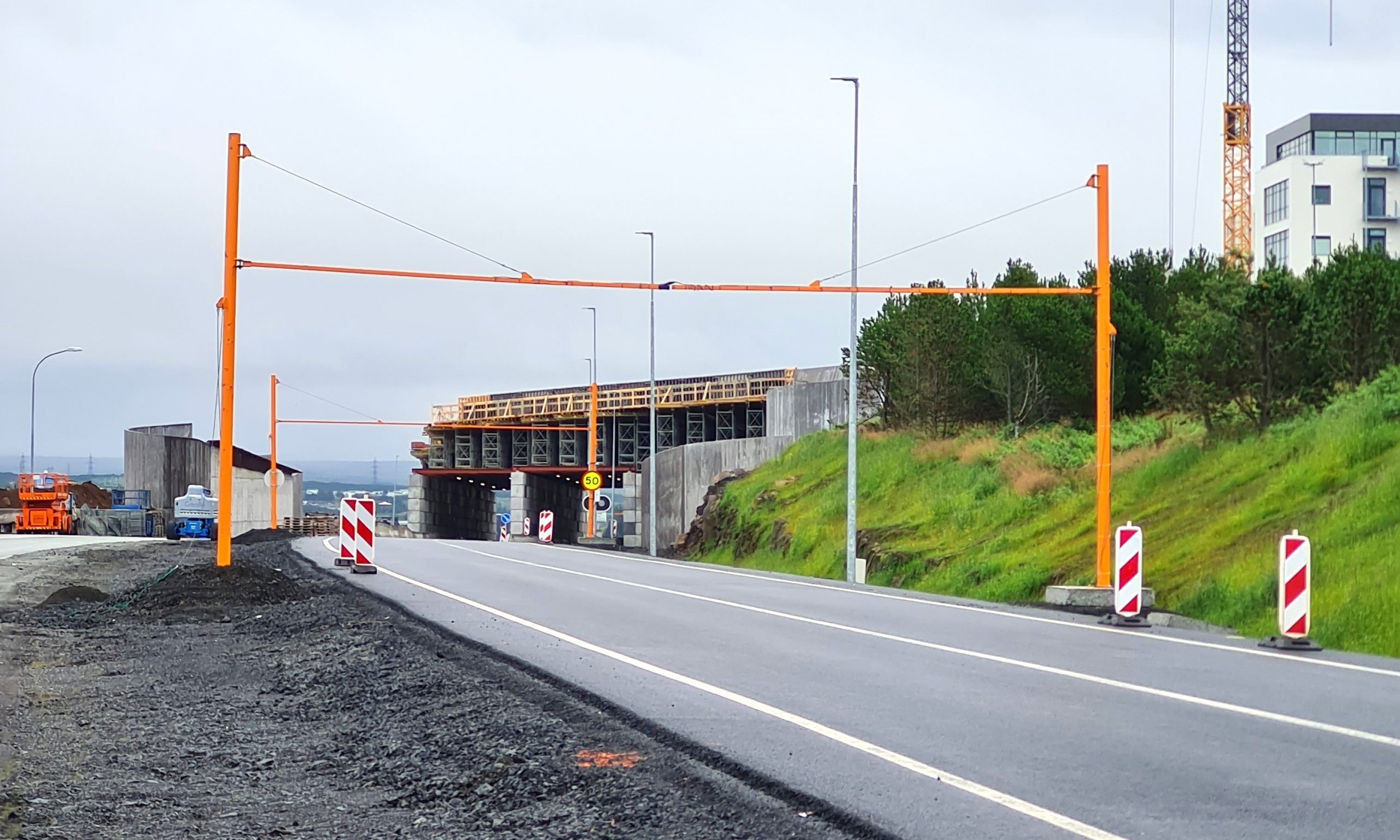
Samkvæmt reglugerð er hámarkshæð ökutækja 4,2 metrar.
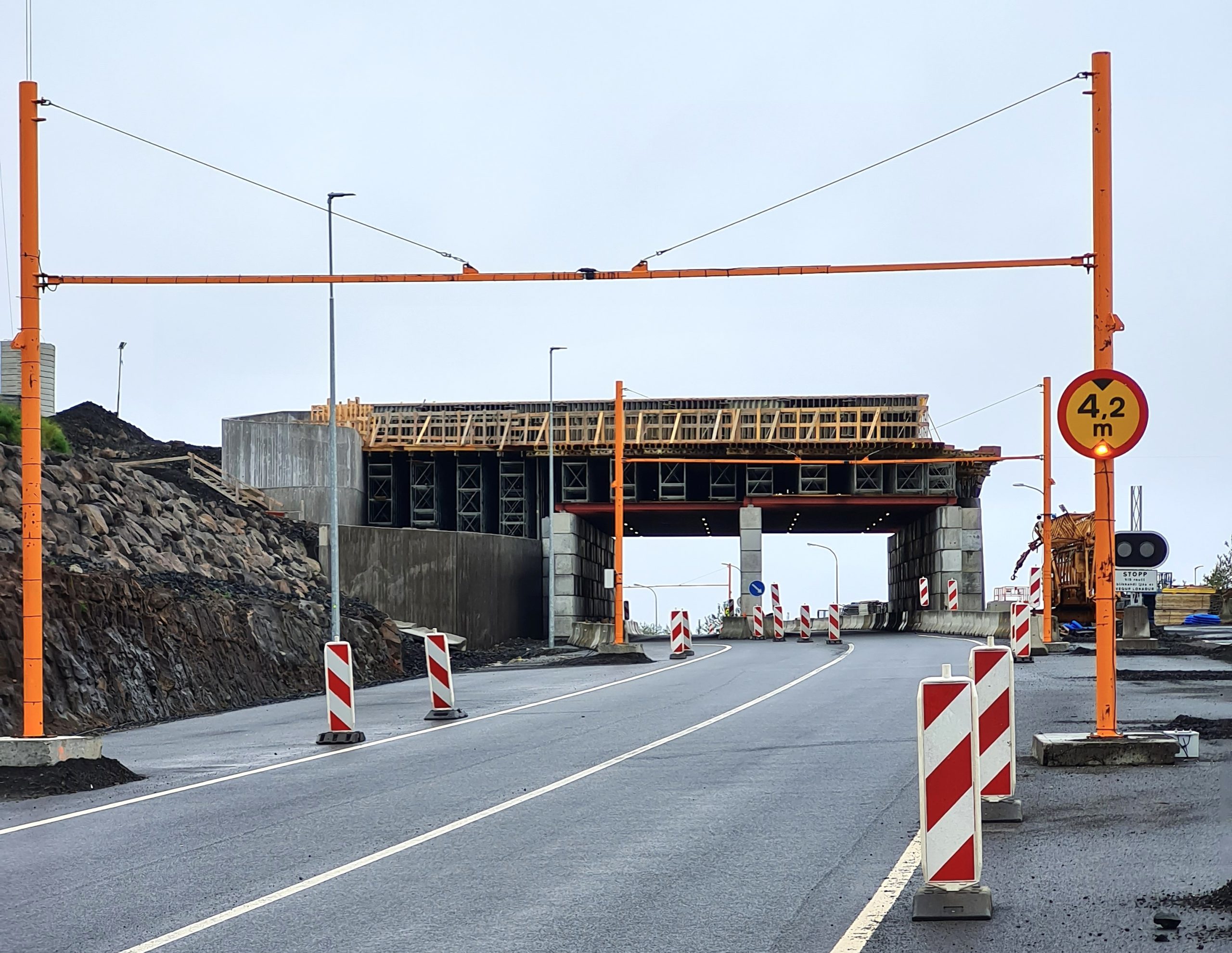
Hæðaslárnar eru settar upp til að draga úr slysahættu.
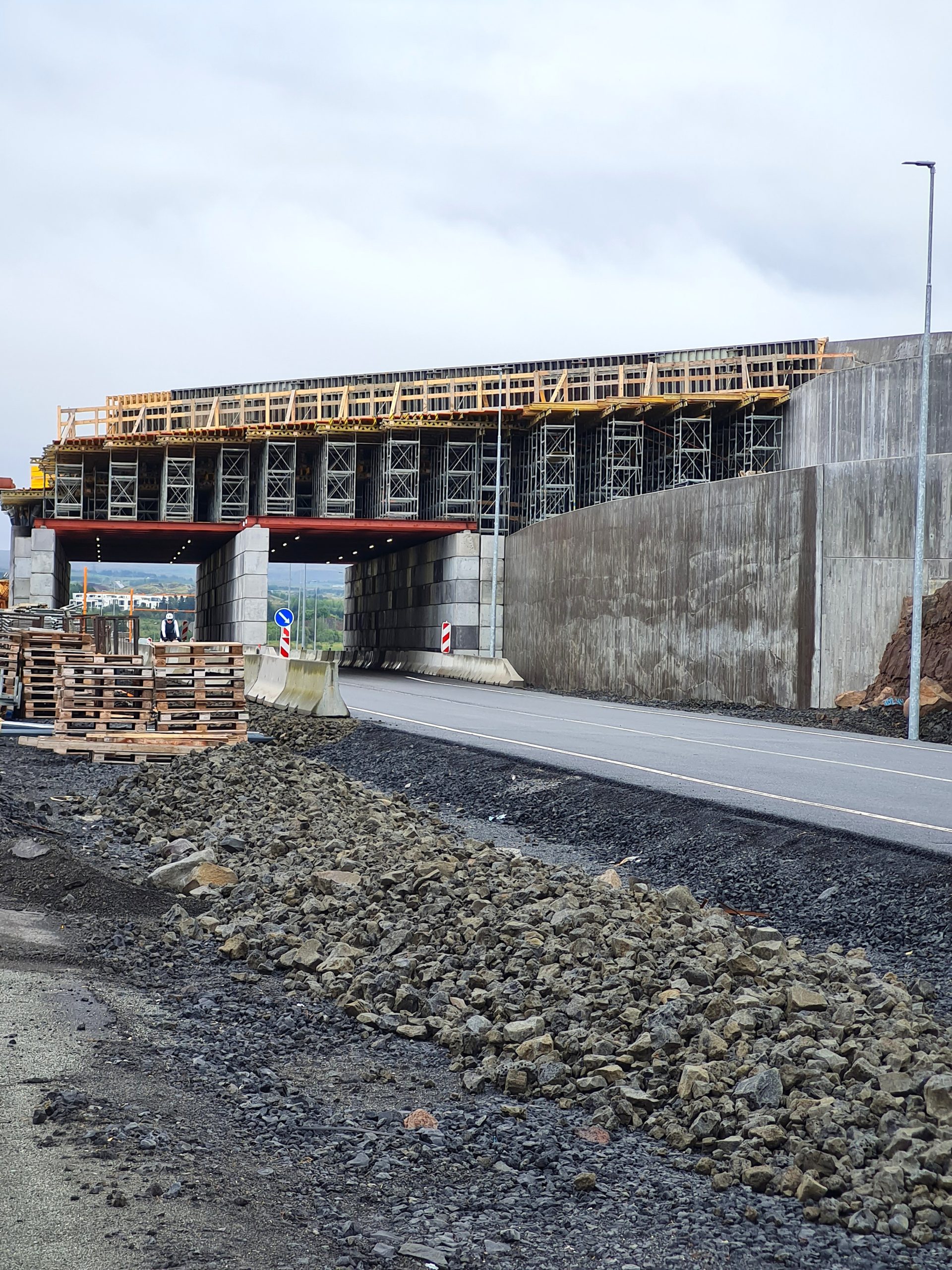
Ef farmur er það hár að hann rekist í undirslátt brúarinnar verður hætta á hruni.
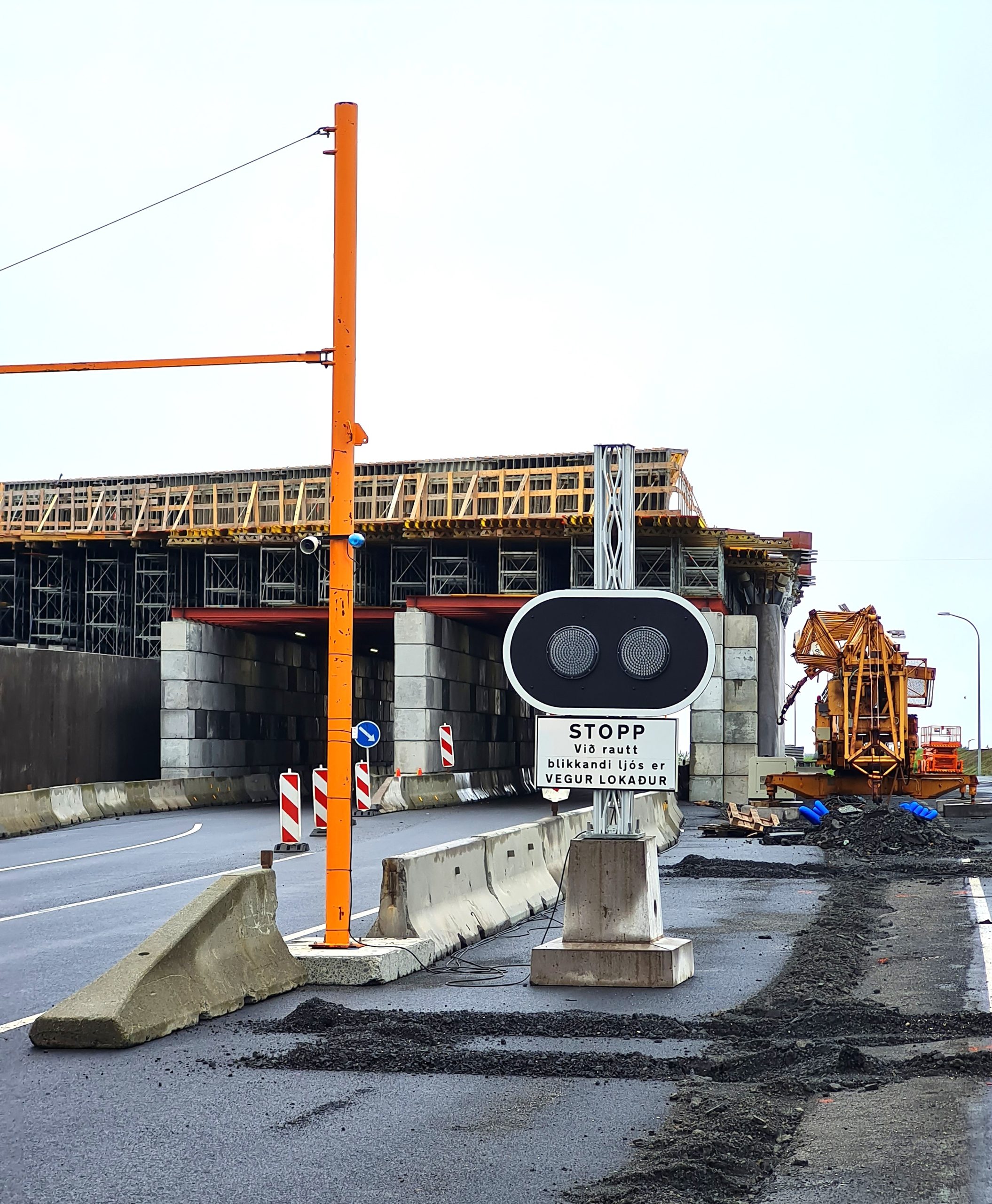
Rauð, blikkandi ljós virkjast ef ekið er á hæðaslá.