
15 desember 2025Fibre-reinforced polymer used in new bridge
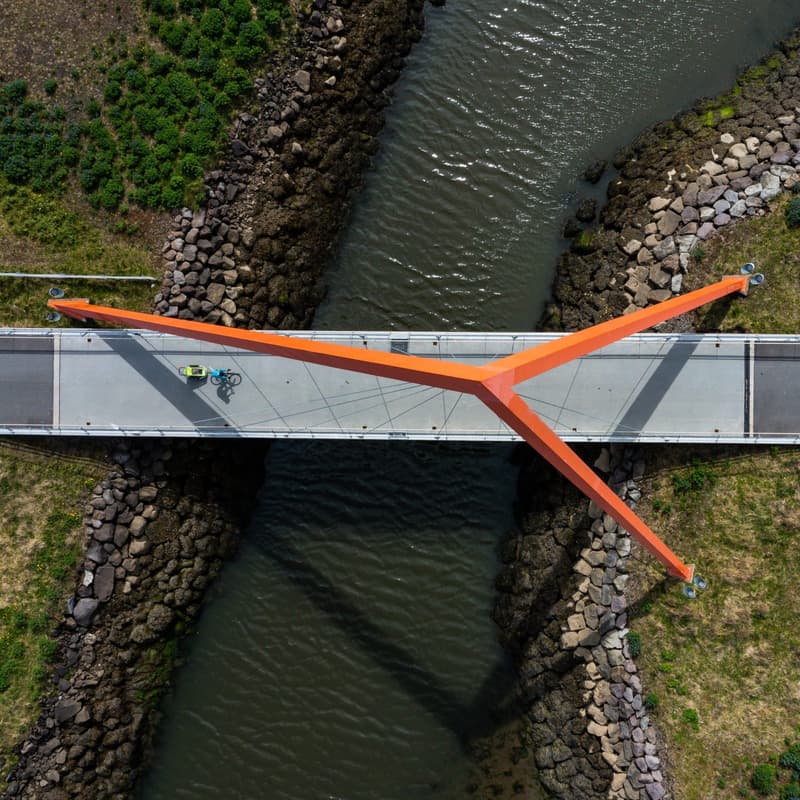
During the renewal of the bridge over the Kaldá river near Snorrastaðir in Hnappadalur, a new construction method was used in which the entire superstructure was made of fibre-reinforced polymer. The old bridge was demolished in mid-September, after which work began under tight time constraints to ensure that the new bridge would be ready before winter. The effort was successful, and the new bridge was opened to traffic in early December.
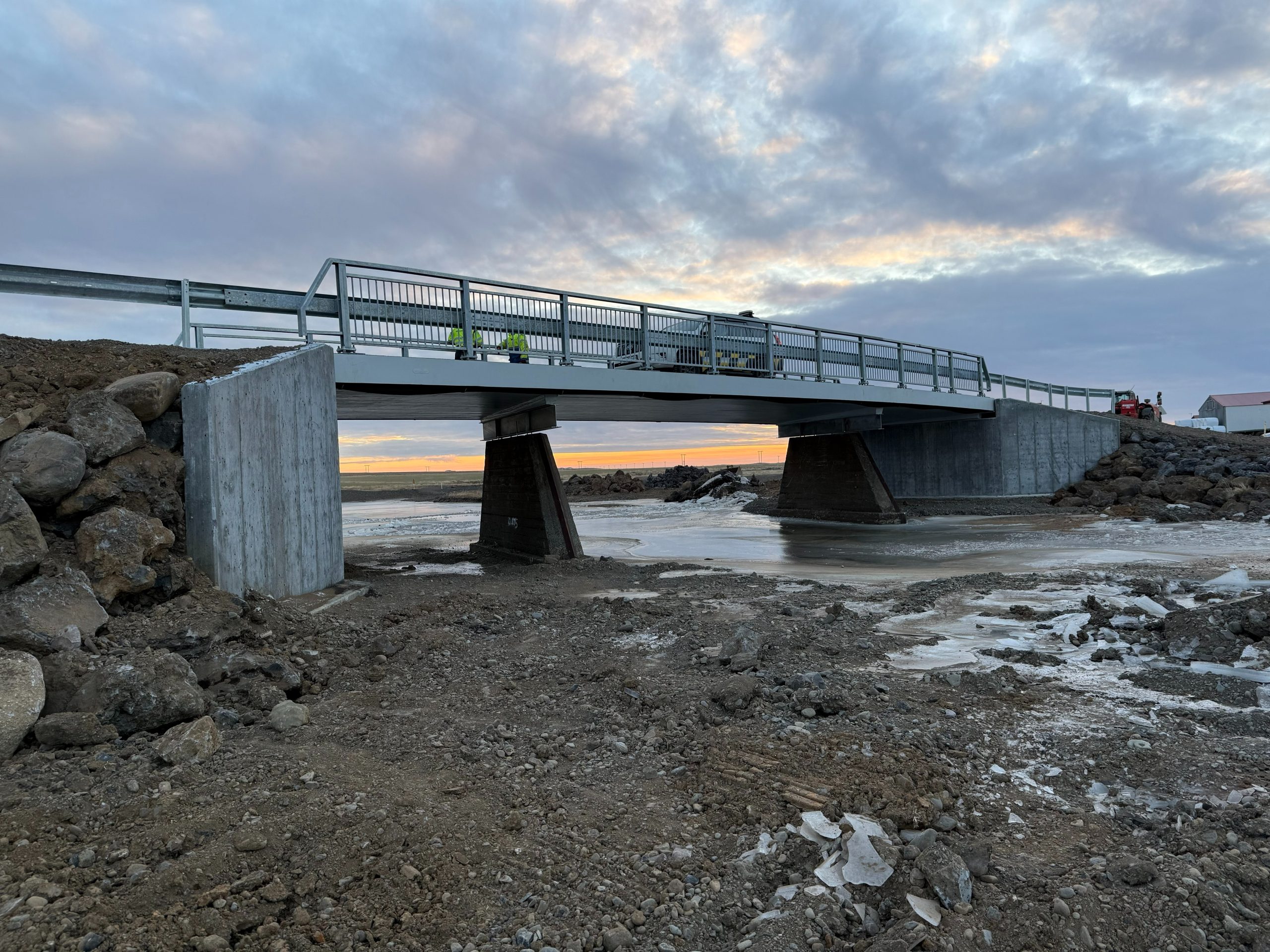
Nýja brúin yfir Kaldá.
The bridge over the Kaldá river was built in 1958 and designed for a maximum vehicle weight of 18 tonnes. It was 30 metres long but only 2.8 metres wide—a steel girder bridge with a timber deck and timber railings. The bridge rested on four piers: two concrete intermediate piers and two end piers made of timber piles (telephone poles).
The bridge served as the access road to Snorrastaðir, where a well-established dairy farm with a modern, high-tech cowshed is operated. Traffic from the farm shared the bridge with pedestrians heading towards Eldborg, a popular destination visited by thousands of tourists each year. Renewal had become necessary, as the bridge had reached the end of its service life and had deteriorated significantly, reflecting the standards of its time.
A durable and cost-effective solution
Preparatory work for the project took just over two years. The Icelandic Road and Coastal Administration set out to develop a durable solution that would meet modern requirements for load-bearing capacity and road user safety, while also allowing for a short installation period on site. This approach was intended to encourage contractors to propose innovative and cost-effective bridge construction solutions, while at the same time minimizing the risk of disrupting access to Snorrastaðir during construction. As this is the only route to and from the farm, any prolonged closure could have had a significant impact on its operation.
The project, which included design, fabrication and installation of the new bridge superstructure, was put out to tender. One of the key conditions of the tender was a very tight construction schedule, allowing contractors just two weeks to install the bridge superstructure on site.
Two bids were received, with Trefjar ehf., in cooperation with the Dutch company Fibercore, selected as the winning bidder. Fibercore specializes in the production of fibre-reinforced polymer bridges. Contracts between the Icelandic Road and Coastal Administration and Trefjar ehf. were signed on 5 May 2025. Detailed design was completed in early August, while the engineering firm Efla simultaneously designed new abutments for the bridge.
The Road and Bridge Construction Unit of the Icelandic Road and Coastal Administration carried out the construction of the new concrete abutments. Eight 12-metre-long reinforced concrete piles were driven beneath the abutments, which are approximately three metres high and include earth-retaining wings. The intermediate piers from the old bridge were reused.
The bridge superstructure was fabricated and transported as a single unit from Rotterdam in the Netherlands. It was unloaded at Þorlákshöfn harbour, transported to the site, and lifted into place and secured onto the piers in a single day, on 19 November 2025.
New opportunities and continued development
The Icelandic Road and Coastal Administration sees significant potential in this construction method and plans to continue developing new and cost-effective bridge solutions in cooperation with private partners in the coming years. This is particularly relevant for the upgrading and renewal of older bridge structures, many of which have reached an advanced age and no longer meet modern requirements.
Velverk ehf., an earthworks contractor, carried out the groundworks for the Icelandic Road and Coastal Administration, as well as the relocation of utility services on behalf of the landowner, RARIK and Míla.
Project completion was scheduled for 15 November 2025, with an estimated construction cost of ISK 136.5 million. Final costs have not yet been confirmed, but are expected to remain within the approved budget.
The accompanying video shows the moment when the bridge deck was lifted into place on 19 November. The Road and Bridge Construction Unit of the Icelandic Road and Coastal Administration was responsible for guiding the superstructure into its final position on the bridge piers.
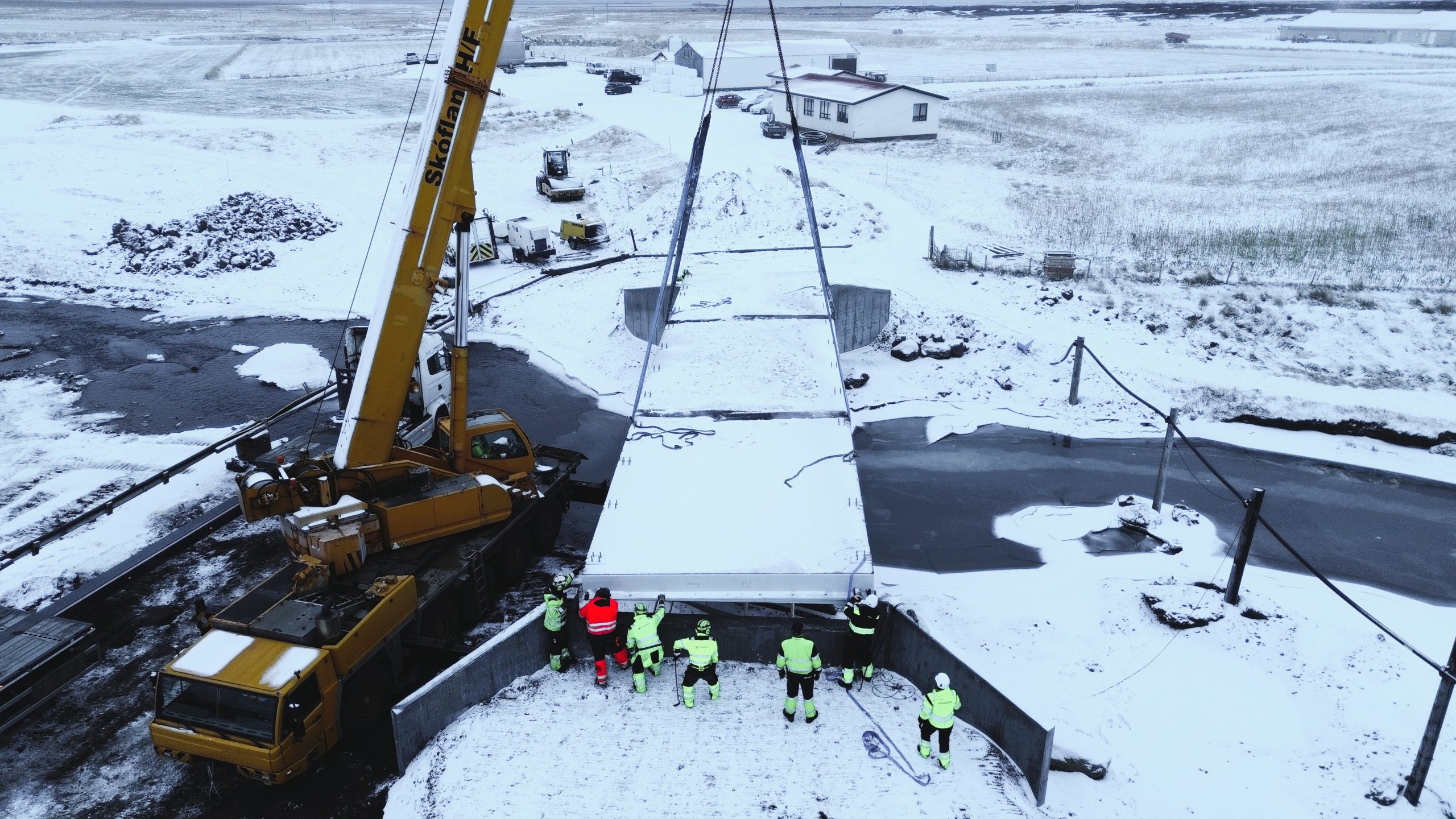
Yfirbygging brúarinnar var smíðuð og flutt í heilu lagi frá Rotterdam í Hollandi
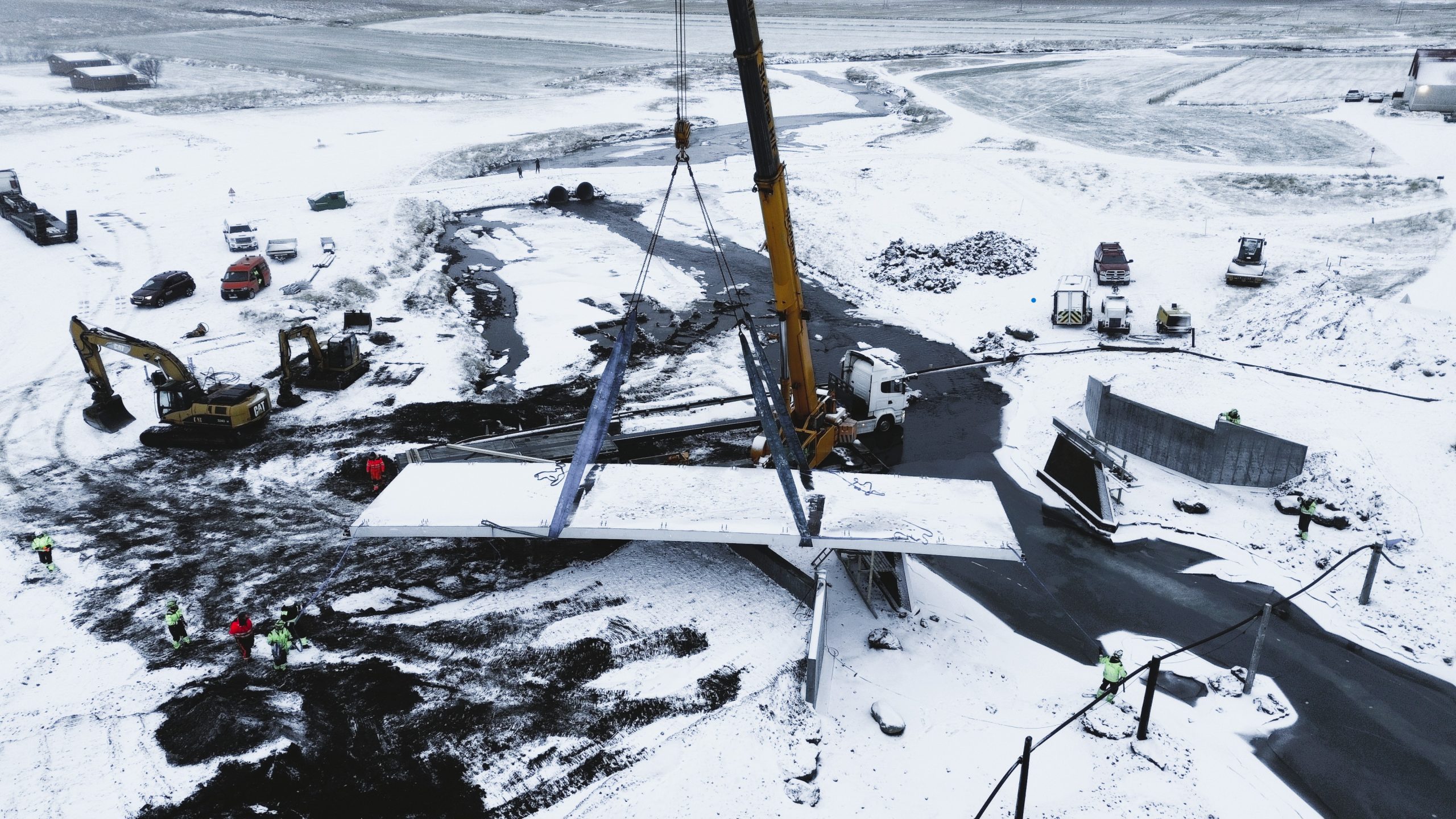
Vinnuflokkur Vegagerðarinnar sá um að koma brúnni á sinn stað.
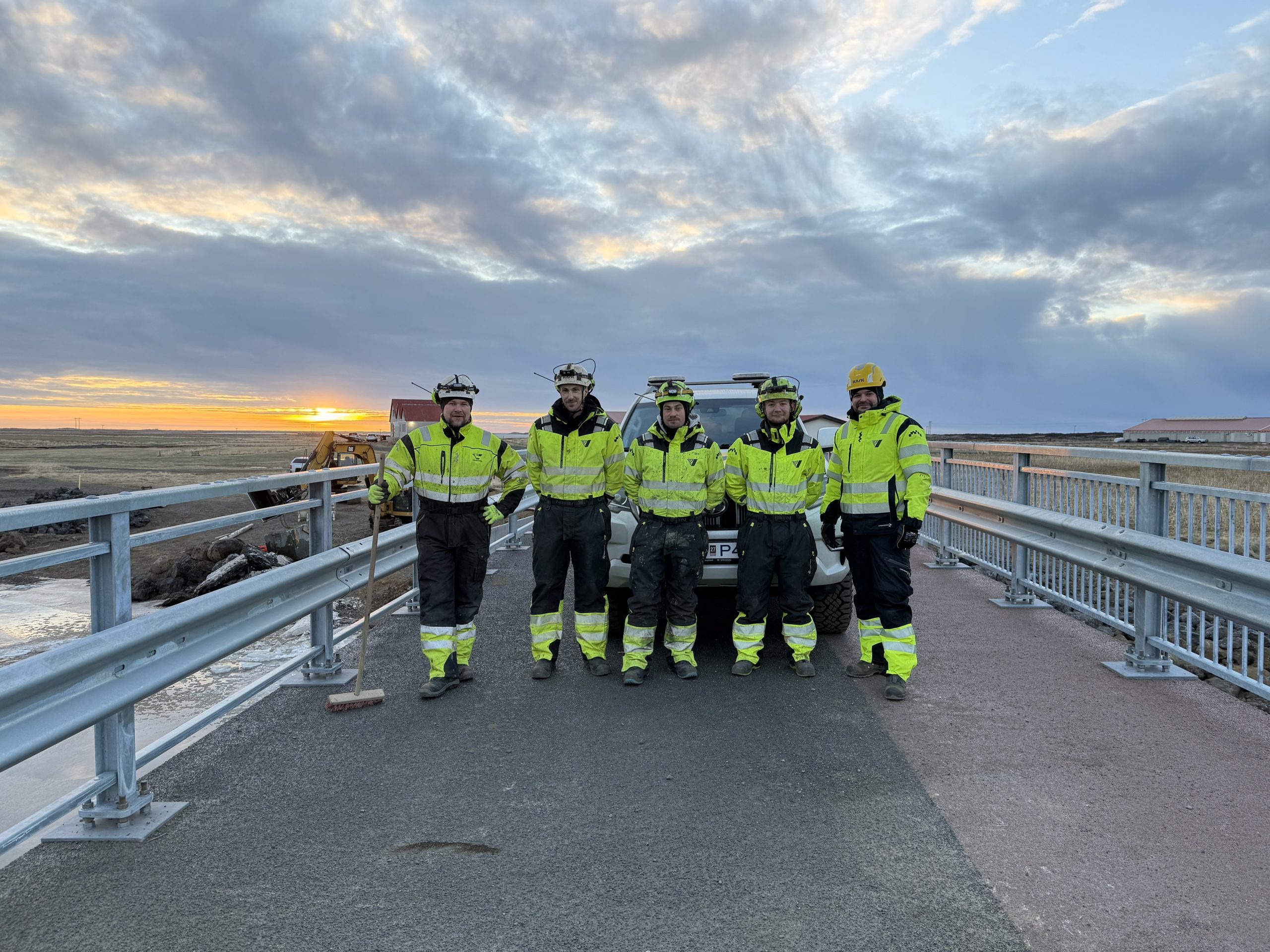
Vinnuflokkur Vegagerðarinnar, ásamt verkefnisstjóra.
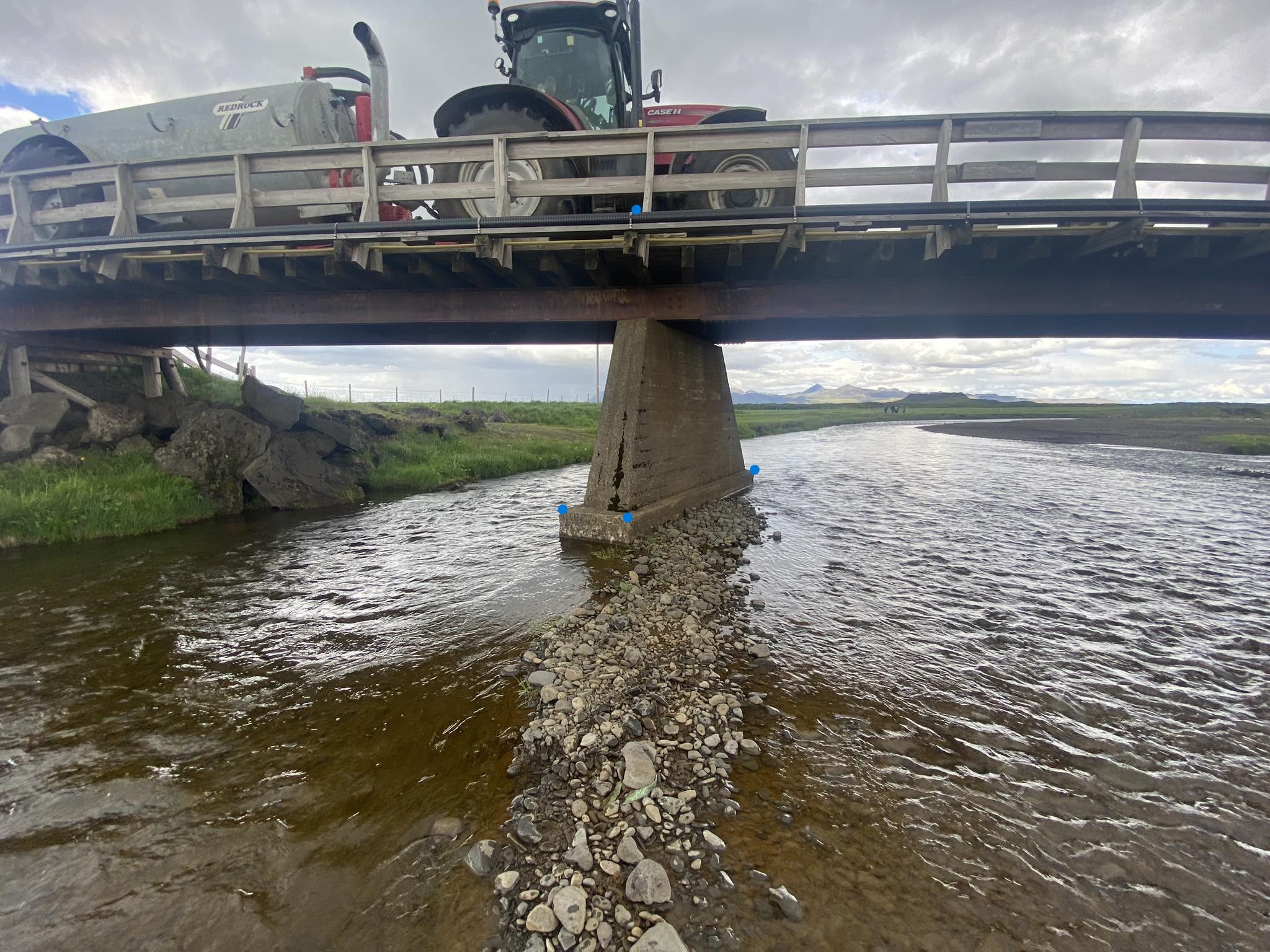
Gamla brúin var komin til ára sinna.